
In the complex world of sports betting, understanding how team form influences odds movement is crucial for both casual bettors and professional punters. Team form refers to the recent performance of a team over a series of games, reflecting patterns of wins, draws, losses, goal-scoring consistency, defensive stability, and overall momentum. This dynamic factor has a significant impact on how bookmakers adjust odds and how the betting public perceives value.
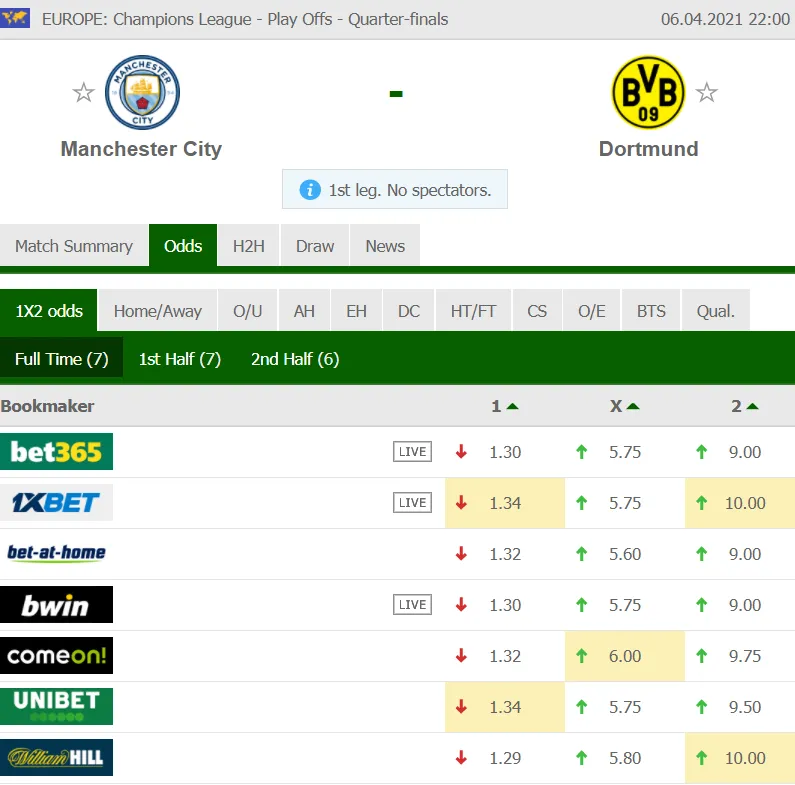
Bookmakers constantly monitor team form to set odds that reflect the probability of different outcomes. A team that has been winning consistently, particularly against strong opponents, is often considered in good form. Conversely, a team struggling to secure victories or conceding goals regularly may be perceived as out of form. When a team shows strong form, bookmakers may shorten the odds for them to win, anticipating higher demand for bets on that team. Shorter odds represent a lower potential payout but higher implied probability, aligning with the bookmaker’s assessment of the team’s current strength.
Beyond just the results, bookmakers also consider the context of these performances. A team may have won multiple matches, but if those victories were narrow or against weaker opponents, the perceived quality of form might be less significant. Analysts examine goal differences, home versus away performance, injuries, and suspensions to refine the understanding of a team’s current capabilities. For example, a team might have a four-match winning streak, but if several key players were absent during that period, the bookmaker might be cautious about heavily shortening odds for future games.
The betting market itself reacts to team form, often amplifying its influence on odds. Bettors tend to follow trends and may place bets on teams perceived as “hot” due to a series of strong performances. This collective behavior can cause odds to move even before a match begins. If a large volume of bets is placed on a team in good form, bookmakers adjust the odds to balance risk, reducing potential exposure on that team. Conversely, a team in poor form might see odds lengthen as fewer bets are placed in their favor, increasing potential payout to attract interest.
Momentum plays a psychological role as well. Bettors and bookmakers alike consider a team’s recent trajectory, not just isolated results. For instance, a team that lost early matches but has since demonstrated significant improvement might see odds shift more favorably. Momentum affects not only pre-match odds but also in-play betting, where live performance indicators can rapidly influence odds adjustments. A team that scores early or dominates possession may see odds shorten in real-time, reflecting their apparent form during the match.
In addition to results and performance metrics, external factors also shape the interpretation of form. Venue can be critical; some teams perform exceptionally well at home but struggle away, while others maintain consistency regardless of location. Weather conditions, travel schedules, and even crowd influence can subtly affect performance trends. Bookmakers integrate these factors alongside form data to provide odds that realistically reflect the probability of various outcomes. Bettors who understand these nuances can make more informed decisions, recognizing that raw form statistics might not tell the whole story.
Injuries and squad rotation further complicate the impact of form on odds. A team in excellent form may face key player absences due to injury, suspension, or rest, potentially undermining recent trends. Bookmakers often adjust odds to account for these variables, particularly when a star player significantly contributes to the team’s recent successes. Similarly, the depth of the squad is important; teams with strong benches can maintain form despite changes in the starting lineup, whereas teams reliant on a few key individuals may see odds fluctuate dramatically when those players are unavailable.
Public perception and media narratives can also distort how team form affects odds movement. A team receiving significant media attention for recent victories may attract more bets than warranted by statistical analysis alone. Bookmakers must carefully monitor both objective form metrics and subjective betting patterns to maintain balanced books. Odds may move not only based on actual form but also on the volume and distribution of bets placed, reflecting the market’s collective interpretation of form.
Historical head-to-head records add another layer of complexity. Even if a team is in good current form, repeated losses against a particular opponent might moderate odds adjustments. Conversely, a team with a poor recent record but a historically dominant position against an opponent might see odds shortened despite their current struggles. Understanding the interplay between recent form and historical context helps bettors anticipate how odds might move and identify potential value opportunities.
In addition, timing plays a crucial role. Odds can shift dramatically in the days leading up to a match as form data evolves and new information emerges. A team might secure a key victory in the week before a match, causing odds to shorten significantly. Conversely, a surprising loss or injury update can lengthen odds rapidly. Experienced bettors track these fluctuations closely, recognizing that early odds may not fully reflect recent form trends, creating opportunities to place value bets before the market adjusts.
Betting markets are also sensitive to streaks and winning patterns. A prolonged unbeaten run can significantly influence perception, sometimes leading to overestimation of a team’s true probability of success. Bookmakers counter this by adjusting odds in proportion to the risk of betting concentration. Similarly, a losing streak might make odds more generous, attracting contrarian bettors seeking value in underdogs. Understanding how these streaks affect both bookmaker strategy and market sentiment is key for interpreting odds movement in relation to team form.
Ultimately, team form is a multidimensional factor that influences odds movement through a combination of objective performance metrics, psychological momentum, market behavior, and contextual considerations. Both bookmakers and bettors use form to anticipate outcomes, adjust strategies, and manage risk. Recognizing the nuances of form—beyond simple win-loss records—enables smarter betting decisions, whether for pre-match analysis, in-play adjustments, or long-term forecasting. By examining team form comprehensively, one can better understand how and why odds fluctuate, gaining insight into the dynamic relationship between recent performance and market valuation.






Leave a Reply